

Thanksgiving Bread Stuffing has always been the heart of our holiday table, a dish that whispers tales of family gatherings and cozy autumn evenings. I can still vividly recall the aroma wafting from my aunt’s kitchen every November – that comforting blend of sage, thyme, and savory bread. This particular Thanksgiving stuffing recipe is a labor of love, but oh-so-worth-it for that classic, homemade taste. It uses torn Italian bread, which I’ve found creates the most wonderfully tender yet slightly crisp texture when baked. Let’s get cooking this delicious Thanksgiving stuffing side dish together!
Why You’ll Love This Thanksgiving Bread Stuffing
This recipe is a winner for so many reasons, making it a must-have for your holiday table:
- Unbeatable Savory Flavor: The combination of herbs, aromatics, and rich giblet broth creates a truly delicious Thanksgiving stuffing side dish.
- Surprisingly Easy to Make: Despite its impressive taste, this is an easy Thanksgiving stuffing that anyone can master.
- Budget-Friendly: It uses simple, affordable ingredients that are readily available, stretching your holiday meal further.
- Customizable for Everyone: Easily adapt it to be a vegetarian Thanksgiving stuffing or gluten-free Thanksgiving stuffing with simple swaps.
- Perfect Make-Ahead Meal: This recipe is ideal for making ahead, reducing stress on Thanksgiving day.
- Nostalgic Comfort: It delivers that classic, homemade Thanksgiving stuffing taste that brings back cherished memories.
- A Crowd-Pleaser: This easy Thanksgiving stuffing is guaranteed to be a hit with guests of all ages.
Ingredients for Traditional Thanksgiving Stuffing
Gathering the right Thanksgiving stuffing ingredients is the first step to a perfect holiday meal. My grandmother always said the quality of your bread makes a huge difference, so I love using torn Italian bread for this classic recipe. It creates a wonderful texture that soaks up all the savory flavors.
- 1 turkey neck and giblets – for making our rich giblet broth
- 16 cups water – the base for our flavorful broth
- 4 loaves Italian bread, torn into 1-inch pieces – the heart of our stuffing, dried for texture
- 4 sticks unsalted butter – to sauté our aromatics and add richness
- 2 cups diced celery leaves and tender top stalks – for that essential aromatic base
- 2 cups diced onions – adds sweetness and depth
- 2 – 4 tbsp “Thanksgiving Seasoning” – a blend of sage, thyme, rosemary, marjoram, nutmeg, salt, and pepper for that signature taste
- 1½ cups chopped roasted mushrooms (optional) – for an extra earthy, savory note
- 1 cup chopped tart apples or dried cranberries (optional) – adds a touch of sweetness and tartness
- 1 cup toasted pecans or walnuts (optional) – for a delightful crunch
- 1–2 eggs, beaten (optional) – helps bind the stuffing if you prefer a more cohesive texture
How to Make Classic Thanksgiving Stuffing
Learning how to make Thanksgiving stuffing from scratch is incredibly rewarding, and this recipe breaks it down into manageable steps for the best results. Trust me, the aroma alone will get everyone excited for the feast!
Making the Giblet Broth
Step 1: Start by simmering the turkey neck and giblets in a large pot with 16 cups of water. Let this cook for about 1.5 to 2 hours. This slow simmer creates a deeply flavorful giblet broth that’s essential for our stuffing. Once done, strain the broth and reserve it. If you plan to include the chopped giblets in your stuffing, finely chop them now.
Preparing the Bread
Step 2: While your broth is simmering, tear your Italian bread into roughly 1-inch pieces. It’s important to tear it rather than cut it for a better texture. Spread these torn bread pieces on baking sheets. You can let them stale at room temperature for a few hours, or for a quicker method, dry them in a preheated oven at 300°F (150°C) for 15-20 minutes until they’re crisp to the touch.
Sautéing Aromatics and Seasonings
Step 3: In a large skillet, melt all 4 sticks of unsalted butter over medium heat. Add your diced celery leaves and tender stalks, along with the diced onions. Sauté these until they’re soft and translucent, which usually takes about 8-10 minutes. You’ll start to smell that delicious, sweet aroma of cooked vegetables.
Step 4: Stir in your “Thanksgiving Seasoning” blend – that’s sage, thyme, rosemary, marjoram, nutmeg, salt, and pepper. Cook for just one more minute, stirring constantly, until the herbs are fragrant. This blooms the spices and releases their full flavor into the butter.
Combining and Moistening the Stuffing
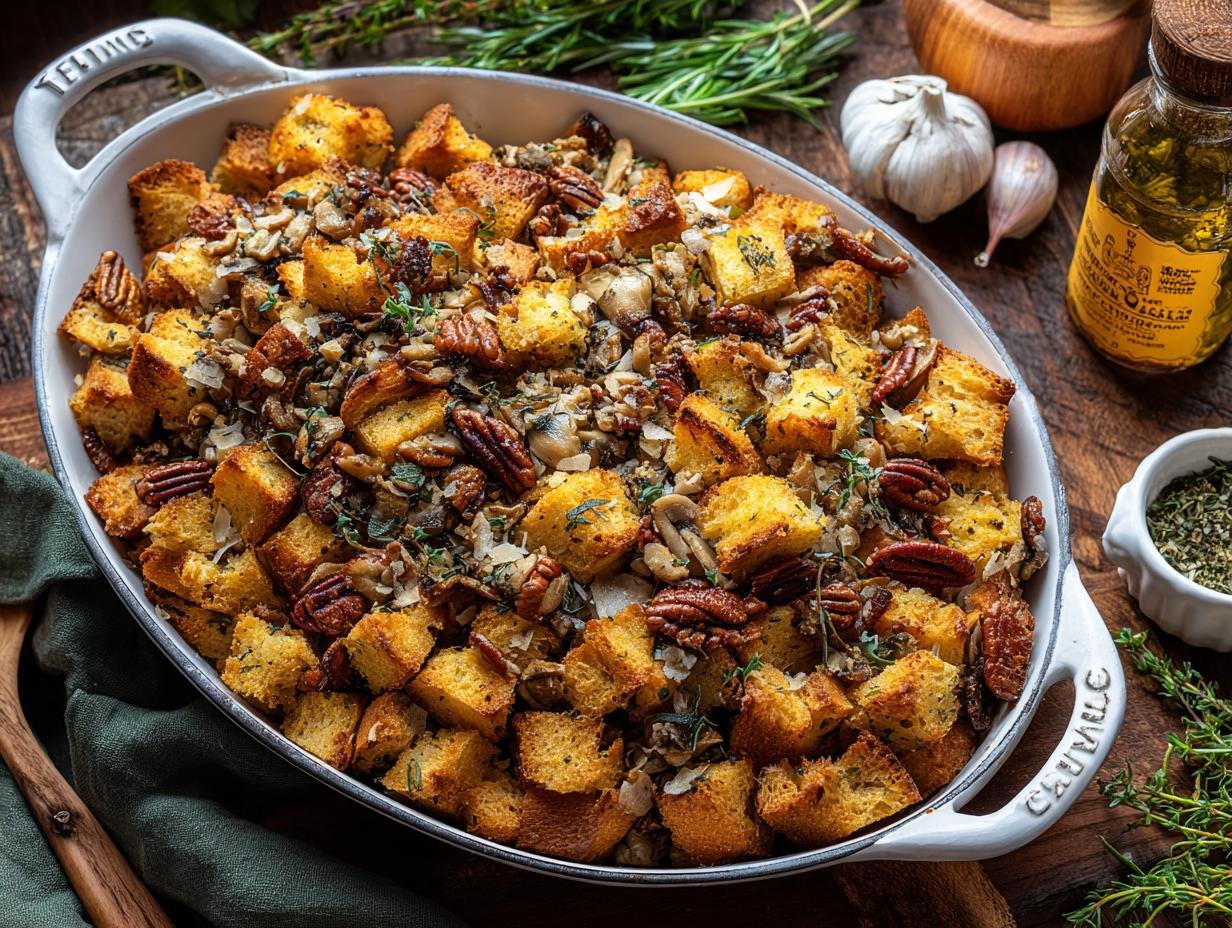
Step 5: Now, in a large mixing bowl or a roasting pan, combine the dried bread pieces, the sautéed vegetable and butter mixture, and the chopped giblets (if using). Add any optional ingredients you’ve chosen, like roasted mushrooms, apples, or toasted nuts. This is where your homemade Thanksgiving stuffing really starts to come together.
Step 6: Gradually pour the hot giblet broth over the bread mixture. Gently toss everything together to moisten the bread. Add just enough broth so the bread is soft but not soggy – you don’t want a mushy stuffing. If you’re using the optional eggs to help bind it, mix them in with the last bit of broth.
Baking the Stuffing
Step 7: Preheat your oven to 350°F (175°C). Lightly grease your baking dishes. Transfer the stuffing mixture into the prepared dishes, spreading it out evenly without pressing it down too tightly. This helps ensure even cooking.
Step 8: Cover the baking dishes tightly with aluminum foil. Bake for 40 minutes. This steaming period allows the flavors to meld beautifully. After 40 minutes, remove the foil and continue baking for an additional 15-20 minutes, or until the top is beautifully golden brown and crisp. This step is crucial for achieving that perfect texture when you make Thanksgiving stuffing.

Preparing the Giblet Gravy
Step 9: While the stuffing bakes, you can prepare the gravy. If you have about 4 cups of your reserved giblet broth, melt ½ cup of butter in a saucepan. Whisk in ½ cup of all-purpose flour to create a roux, cooking until it’s a pale blonde color. Slowly whisk in the warm giblet broth until the mixture is smooth. Simmer this gently until it thickens to your desired consistency. Season with salt, pepper, and a bit more Thanksgiving seasoning to taste. Stir in your chopped giblets if you saved them.
Pro Tips for the Best Homemade Thanksgiving Stuffing
Elevating your Thanksgiving Bread Stuffing is all about a few key techniques. I’ve found these tips make all the difference in achieving that perfect, memorable holiday side dish.
- Always dry your bread cubes thoroughly; this is non-negotiable for preventing a soggy stuffing. I like to spread them on baking sheets overnight if I have the time.
- Don’t over-mix the stuffing once the liquid is added. Gently toss to combine; overmixing can lead to a dense, gummy texture.
- Taste and adjust seasonings before baking. The bread will absorb a lot of flavor, so a slightly bolder seasoning in the mix is often perfect.
What’s the secret to perfect Thanksgiving Bread Stuffing?
The secret to achieving the best Thanksgiving stuffing lies in the bread preparation and the broth. Ensuring your bread is well-dried and using a rich, homemade giblet broth creates unparalleled depth of flavor and texture.
Can I make Thanksgiving stuffing ahead of time?
Absolutely! You can assemble the stuffing mixture (up to the point of adding liquid) up to two days in advance. Store it covered in the refrigerator. When you’re ready to bake, add the broth and proceed with the recipe, adding about 5-10 minutes to the covered baking time.
How do I avoid common mistakes with homemade Thanksgiving stuffing?
The most common pitfalls are using fresh bread (leading to sogginess) and overmixing. Ensure your bread is stale or dried, and handle the mixture gently after adding the liquid to keep it light and fluffy.
Best Ways to Serve Savory Thanksgiving Stuffing
This Thanksgiving Bread Stuffing is so versatile, it pairs wonderfully with almost anything on your holiday table. For a truly traditional experience, serve it alongside roasted turkey or ham. It also makes a fantastic complement to mashed potatoes and cranberry sauce, creating that classic Thanksgiving flavor profile. Consider it your go-to delicious Thanksgiving stuffing side dish that brings everyone together. You can even serve it in individual ramekins for a more elegant presentation, ensuring everyone gets a perfect portion of this savory delight.
Nutrition Facts for Thanksgiving Bread Stuffing
When planning your holiday menu, understanding the nutritional breakdown of each dish is helpful. This Thanksgiving stuffing recipe offers a satisfying side with a balanced profile.
- Calories: 280 kcal
- Fat: 16g
- Protein: 6g
- Carbohydrates: 29g
Nutritional values are estimates and may vary based on specific ingredients used, especially optional additions.
How to Store and Reheat Thanksgiving Bread Stuffing
One of the best things about this recipe is that it’s a fantastic make ahead Thanksgiving stuffing option, which can significantly reduce your workload on the big day. Once your delicious stuffing has been baked and cooled completely (this is important to prevent spoilage), store it in airtight containers. For refrigeration, it will keep well for about 3 to 4 days. If you need to store it for longer, you can freeze it for up to 3 months. Ensure it’s wrapped tightly in plastic wrap and then foil to prevent freezer burn.
When it’s time to reheat, if your stuffing is coming from the refrigerator, you can gently warm it in a covered baking dish at 300°F (150°C) for about 20-30 minutes, or until heated through. If reheating from frozen, allow it to thaw overnight in the refrigerator first. For a crispier top, remove the foil during the last 10-15 minutes of reheating. You can also reheat individual portions in the microwave, though it might not have the same crisp texture.
Frequently Asked Questions About Thanksgiving Stuffing
What is Thanksgiving stuffing?
Thanksgiving stuffing, often called dressing, is a beloved side dish traditionally made from bread cubes mixed with aromatics like onion and celery, herbs, and broth. It’s seasoned and baked, often in a casserole dish or sometimes inside a turkey. It’s a comforting and flavorful staple that complements the main course of a holiday meal beautifully.
Why is stuffing eaten at Thanksgiving?
The tradition of eating stuffing at Thanksgiving dates back centuries, with roots in ancient Roman cooking where meat was stuffed with grains and herbs. In early American history, cooks would stuff poultry with breadcrumbs and seasonings to keep the meat moist and add flavor. Over time, it evolved into a standalone side dish, becoming a quintessential part of the Thanksgiving feast, symbolizing abundance and togetherness.
Can I make Thanksgiving Bread Stuffing with cornbread?
Absolutely! A cornbread Thanksgiving stuffing is a delicious variation. You can cube and dry your favorite cornbread instead of Italian bread. The process is very similar, but the cornbread adds a slightly sweet and crumbly texture that many people adore. It’s a simple swap that offers a wonderful twist on the classic.
How do I make Thanksgiving stuffing moist if it dries out?
If your homemade Thanksgiving stuffing comes out a bit dry, don’t worry! The best fix is to gently drizzle a little extra warm turkey drippings, melted butter, or even some warm turkey broth over the top. Cover it with foil for a few minutes to let it absorb the moisture, and it should be perfectly tender again.
Variations of Thanksgiving Stuffing You Can Try
While this classic recipe is a winner, I love experimenting with different twists! If you’re looking for a vegetarian Thanksgiving stuffing, simply omit the giblets and use a rich vegetable broth instead of giblet broth. You can boost the savory flavor with extra mushrooms or a dash of soy sauce. For those needing a gluten-free Thanksgiving stuffing, swap the Italian bread for your favorite sturdy gluten-free loaf. Just be sure to dry it thoroughly, as gluten-free breads can sometimes be more prone to sogginess.
Another fun variation is to use cornbread! A cornbread Thanksgiving stuffing offers a slightly sweeter, crumbly texture that’s incredibly comforting. You can also play with add-ins like roasted butternut squash or a sprinkle of fresh pomegranate seeds for a festive touch and a burst of color. Don’t be afraid to get creative with your homemade Thanksgiving stuffing!
PrintPerfect Thanksgiving Bread Stuffing: 2 Hour Recipe
This Ultimate Thanksgiving Bread Stuffing recipe offers a classic, savory flavor with a rich, homemade giblet gravy. It features torn Italian bread, sautéed aromatics, and optional gourmet additions like roasted mushrooms, apples, or pecans. This hearty and nostalgic dish is perfect for holiday gatherings.
- Prep Time: 30 minutes
- Cook Time: 1 hour 30 minutes
- Total Time: 2 hours
- Yield: 16–20 servings 1x
- Category: Side Dish
- Method: Baking
- Cuisine: American
- Diet: Vegetarian (with modifications)
Ingredients
- 1 turkey neck + giblets
- 16 cups water
- 4 loaves Italian bread, torn into 1-inch pieces
- 4 sticks unsalted butter
- 2 cups diced celery leaves + tender top stalks
- 2 cups diced onions
- 2 – 4 tbsp “Thanksgiving Seasoning” (2 tsp dried sage, 2 tsp thyme, 1 tsp rosemary, 1 tsp marjoram, ½ tsp ground nutmeg, salt & pepper to taste)
- 1½ cups chopped roasted mushrooms (optional)
- 1 cup chopped tart apples or dried cranberries (optional)
- ½ cup toasted pecans or walnuts (optional)
- 1–2 eggs, beaten (optional)
Instructions
- In a large pot, simmer turkey neck and giblets in 16 cups of water for 1.5-2 hours to create giblet broth. Strain and reserve the broth. Finely chop the giblets if using in the stuffing.
- While the broth simmers, tear the Italian bread into 1-inch pieces. Spread on baking sheets and let stale or dry in a 300°F (150°C) oven for 15-20 minutes until crisp.
- Melt all the butter in a large skillet over medium heat. Add diced onions and celery and sauté until soft and translucent, about 8-10 minutes.
- Add the Thanksgiving Seasoning to the skillet and cook for 1 more minute until fragrant.
- In a large mixing bowl or roasting pan, combine the dried bread pieces, sautéed vegetable and butter mixture, chopped giblets, and any optional additions (mushrooms, apples, nuts).
- Gradually pour the hot giblet broth over the bread mixture, tossing gently to moisten. Add just enough broth to make the bread soft but not soggy. If using optional eggs, mix them in with the last bit of broth.
- Preheat oven to 350°F (175°C). Grease baking dishes.
- Transfer the stuffing mixture to the prepared baking dishes, distributing it evenly without packing too tightly.
- Cover the dishes tightly with foil and bake for 40 minutes.
- Remove the foil and bake for an additional 15-20 minutes, until the top is golden brown and crisp.
- For the gravy: If you have about 4 cups of giblet broth, make a roux by melting ½ cup butter and whisking in ½ cup all-purpose flour. Cook until blonde. Slowly whisk in the warm giblet broth until smooth. Simmer until thickened. Season with salt, pepper, and Thanksgiving seasoning. Stir in chopped giblets.
Notes
- Tear the bread instead of cutting it for better texture.
- Drying the bread is crucial to prevent a soggy stuffing.
- Taste the stuffing mixture before baking and adjust seasonings as needed.
- This stuffing can be assembled up to two days in advance and refrigerated. Add 5-10 minutes to the baking time if baking from cold.
- If stuffing comes out dry, drizzle with warm turkey drippings or melted butter.
- If stuffing is soggy, spread on a sheet pan and bake briefly to crisp up.
- For a vegetarian version, omit giblets and use vegetable broth. Add extra mushrooms and a splash of soy sauce for umami.
- For gluten-free, use your favorite sturdy gluten-free bread and ensure seasoning blend is certified gluten-free.
Nutrition
- Serving Size: 1 serving (estimated)
- Calories: 280 kcal
- Sugar: N/A
- Sodium: N/A
- Fat: 16g
- Saturated Fat: N/A
- Unsaturated Fat: N/A
- Trans Fat: N/A
- Carbohydrates: 29g
- Fiber: N/A
- Protein: 6g
- Cholesterol: N/A







Leave a Reply